Your will does not decide who gets your French villa. French law does.
Every other tax on this site is a number you can plan around. This one is not a number at all, at least not at first. Before anyone calculates what your heirs pay on a French villa, French law decides who your heirs ARE, and it may not be the people named in your will. Americans and Britons in particular arrive with a document that works perfectly at home and discovers, at the worst possible moment, that it does not travel. Here is the structure: the civil question first, the tax question second, both with sources and dates.
English
Ready.Two questions, and almost everyone runs them together
A French succession asks two entirely separate questions and answers them under two entirely separate bodies of law. The first is civil: who inherits, in what shares, and can you override that by will. The second is fiscal: what does each person who inherits pay to the French state. You can win the first and still lose badly on the second, or arrange the second perfectly and find the first has redistributed the house. Guides written for buyers usually cover the tax and skip the civil rule, which is precisely backwards, because the civil rule is the one that will genuinely surprise you. In France the two are also administered by different people: the notaire settles the succession and files the declaration, and the tax authority collects. There is no probate court in the English or American sense, and no executor with the power your will thinks it is giving them. If you own French real estate, a French notaire will be involved when you die, whatever your will says and wherever you live.
Forced heirship: the part of your house you are not allowed to give away
French civil law reserves a fixed fraction of an estate to the deceased's children. Article 913 of the Code civil sets it by counting them: gifts and legacies may not exceed one half of the estate if you leave one child, one third if you leave two, and one quarter if you leave three or more. Read the other way round, that is a reserved share, the "reserve hereditaire", of one half, two thirds or three quarters, split between the children, with only the remaining "quotite disponible" free for you to leave to anyone at all. It is not a default that a will can switch off. Note what this does to the case that comes up most often at the top of this market: a second marriage. A common-law arrangement where everything passes to the surviving spouse, entirely normal in an American or English will, collides directly with three children holding three quarters of a French villa between them. Note also what it does NOT do. The reserve protects children and, absent children, in some cases the surviving spouse, and it applies to the estate as a whole under French law, so it is the succession law that governs your estate, not the location of the house, that determines whether it applies at all. Which brings us to the escape hatch.
The EU escape hatch, and the French clawback that took most of it back
Since EU Regulation 650/2012, the succession regulation often called Brussels IV, the default is that one single law governs your whole succession, that of your habitual residence at death, and you may instead choose in your will the law of a country of which you are a national. A US or UK national living outside France can therefore write, expressly, that the law of their nationality governs their estate, and in principle escape the reserve on their French villa. France did not accept that quietly. Loi 2021-1109 of 24 August 2021 added a third paragraph to article 913, applying to successions opened from 1 November 2021: where the deceased or at least one of their children is, at death, a national of an EU member state or habitually resident in one, and the foreign law governing the succession "permits no protective reserve mechanism for children", each child may take a compensatory levy on the assets located in France at the date of death, so as to be restored to the reserve rights French law would have given them. In plain terms: choose New York law, and a disinherited child with an EU link can still reach into the French villa. There is a genuinely recent development here, and it is why this article is worth reading now rather than last year. The provision drew a complaint to the European Commission on the ground that it breaches the very choice-of-law right the regulation grants. The Commission has now issued a pre-closure letter accepting that the legal uncertainty is resolved, on the basis of a literal and restrictive reading: the levy applies only where the foreign law offers NO protective mechanism at all, and the Family Provisions of Anglo-Saxon law count as a functional equivalent of the reserve, so where English law governs the succession the levy should not apply. The director general of CRIDON Nord-Est, writing on 10 June 2026, observes that most systems that lack a reserve have some protective mechanism, so on the same logic the practical scope of article 913 paragraph 3 becomes anecdotal, and asks whether it deserves to stay in the code. That is a Commission position and a notarial reading. It is not a French court ruling, no court has decided the point, and the article is still on the statute book. Anyone planning around it should be told both halves of that sentence.
The tax question: France taxes the villa wherever everybody lives
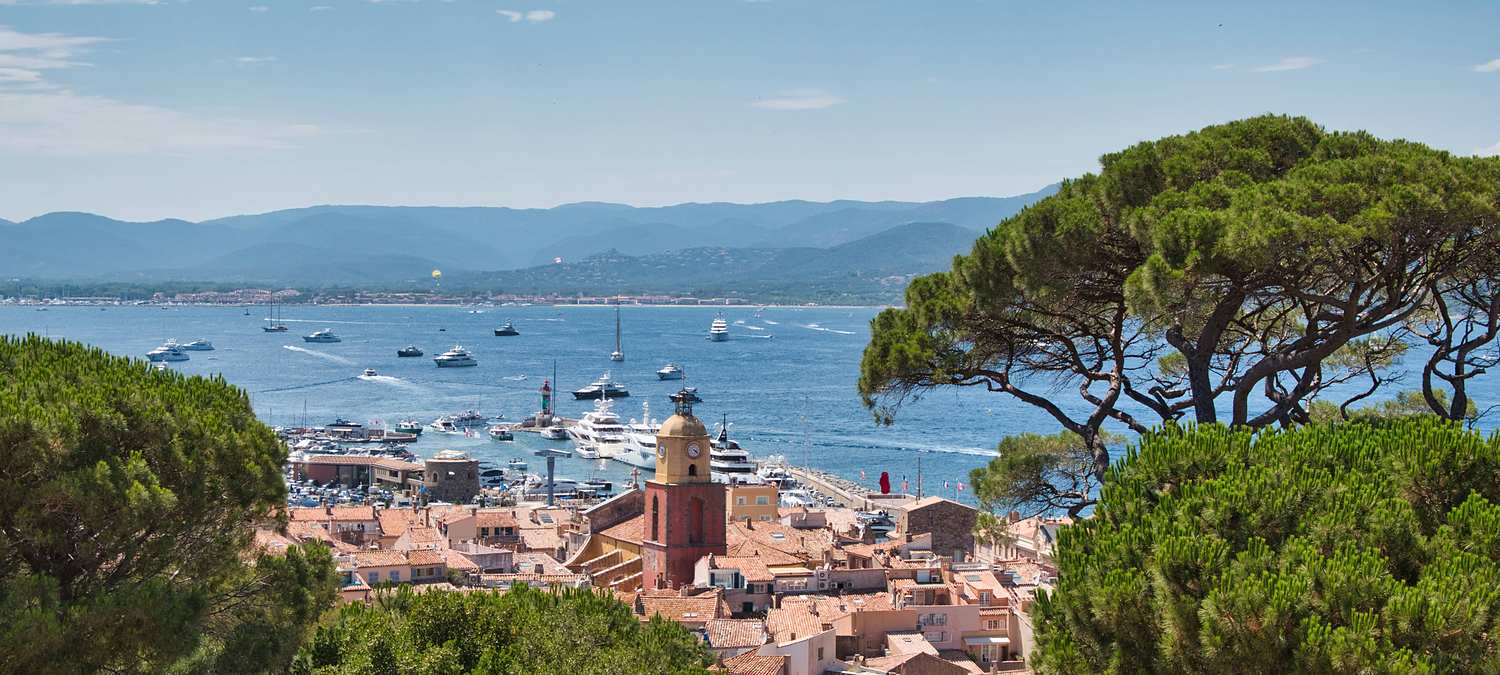
Now the money. French succession duty reaches a French property on a pure situs rule under article 750 ter of the tax code: assets situated in France are taxable in France, whatever the nationality or residence of the deceased and the heir. Your villa in Saint-Tropez is caught even if you are American, died in Connecticut and your children have never set foot in France. Two further limbs matter for completeness. If the deceased was tax resident in France, worldwide assets come into the French base. And if an HEIR has been tax resident in France for at least six years out of the ten preceding the death, the heir's worldwide inheritance is taxable in France, not just the French part, a rule that catches families whose children moved to Paris or Nice. Below that six-year mark only the French-situs assets are taxed. Unlike the UK or the US, France taxes each beneficiary separately rather than the estate as a whole, so the bill depends on who inherits and how the estate is split. Each heir gets a personal allowance, and the 2026 figures are: 100,000 euros from each parent to each child, 15,932 euros between siblings, 7,967 euros to a niece or nephew, 1,594 euros to a grandchild or to anyone unrelated, and 159,325 euros for a disabled heir on top of any other allowance. These have not been index-linked since 2012 and French practice sources report the thresholds frozen to the end of 2028, so do not expect them to grow with the value of your house. One relief matters and is very large: a surviving spouse or PACS partner pays no French succession duty at all.
What the bill actually looks like on a four million euro villa
Illustrations of the arithmetic only, not claims about any real property or about our own market data. Take a French villa valued at 4,000,000 euros, no debt, no surviving spouse, left to two children in equal shares. Each child receives 2,000,000 euros, less the 100,000 euro allowance, so 1,900,000 euros taxable. The 2026 direct-line scale runs 5% to 8,072 euros, 10% to 12,109, 15% to 15,932, 20% to 552,324, 30% to 902,838, 40% to 1,805,677, and 45% above that. Working through it, each child owes about 617,394 euros, so roughly 1,234,789 euros in total on the villa, an effective rate of about 30.9%. Now change one thing and only one thing. Leave the same villa to an unmarried partner, a stepchild you never adopted, or a friend. They fall in the unrelated category: a 1,594 euro allowance and a flat 60% rate. The bill on the same 4,000,000 euro house is about 2,399,044 euros. Nearly two thirds of the property goes to the French state, and since French succession duty is generally payable in cash before the notaire can transfer title, an heir with no liquidity has one realistic option, which is to sell the house they just inherited. That is the practical reason a foreign owner plans this rather than hoping. To put an annual income figure next to those numbers, estimate what the villa could earn in three questions, and if this whole chapter changes your view of France entirely, compare it with a market that levies no inheritance tax at all.
The American layer: why the treaty helps less than you hope
A US citizen or domiciliary is taxed by the United States on their worldwide estate. For 2026 the federal estate and gift exemption for US citizens and domiciliaries is 15 million dollars, indexed, with rates from 18% to 40%, so most estates owe nothing federally. That is exactly the trap: an American with a 4,000,000 euro French villa is comfortably under the US exemption and concludes there is no estate tax problem. There is, and it is French, and it is the figure in the section above. The estate and gift tax convention between France and the United States, signed 24 November 1978 and amended by the protocol signed 8 December 2004, does not remove it. The treaty allocates primary taxing rights over immovable property to the country where it sits, so France taxes the villa first; the United States may still tax the same transfer by a US domiciliary, but must allow a credit for the French tax. Because the French duty on a large villa passing to children is far heavier than the US tax on an estate under the exemption, the credit typically leaves nothing to relieve. It goes the other way too, and it is worth knowing if you are French and buying in Miami: a non-US domiciliary is exposed to US estate tax on US-situs assets with an exemption of only 60,000 dollars, not indexed, though the treaty gives an estate domiciled in France a pro rata share of the full US unified credit rather than that flat 60,000, and a limited marital deduction where the surviving spouse is not a US citizen. Two more things the treaty does not do. It does not touch the civil question at all, so it gives you no protection whatsoever against forced heirship. And a treaty position taken on a US estate or gift tax return must be disclosed on Form 8833. The annual taxes you pay while you hold the villa are covered in the French property taxes a foreign owner actually pays and, above 1,300,000 euros, in the IFI wealth tax article; the tax on selling is in the capital gains article.
The honest disclaimer
This is general information, not tax or legal advice, and we are not tax, legal or estate-planning advisers. Who inherits your French property, in what shares, and what each of them pays depends on your nationality, your habitual residence, your marital regime, your children, how the property is held, any choice of law in your will and the law in force on the day you die, and both French civil law and French tax law are revisited regularly. Take this to a French notaire and, if you are American or British, to a cross-border estate lawyer who works with one, before relying on any of it. Where a point is unresolved we have said so rather than pick the convenient answer: the compensatory levy of article 913 paragraph 3 is reported above as the European Commission and French notarial commentary currently read it, and no French court has yet ruled on that reading. Where a figure is a projection of current rules rather than a settled fact, for instance the allowances remaining frozen to 2028, it is labelled as reported rather than certain. Sources, verified 06/08/2026: the reserve hereditaire fractions of one half, two thirds and three quarters (Code civil article 913, Legifrance); the compensatory levy, its introduction by loi 2021-1109 of 24 August 2021 and its application to successions opened from 1 November 2021, the European Commission pre-closure letter and the reading under which Anglo-Saxon Family Provisions are a functional equivalent of the reserve (CRIDON Nord-Est, David Boulanger, published 10 June 2026, reproducing the Commission letter); the choice-of-law right for the law of one's nationality (EU Regulation 650/2012); the situs rule taxing French assets whatever the residence of deceased and heir, and the six-years-in-ten test that pulls a French-resident heir's worldwide inheritance into the French base (Code general des impots article 750 ter, as summarised by French tax-practice and notarial publications, 2025 and 2026); the 2026 allowances, the direct-line band table from 5% to 45%, the sibling rates of 35% and 45%, the 55% and 60% rates for other heirs, and the total exemption of the surviving spouse and PACS partner (French-Property.com 2026 inheritance tax guide, restating CGI articles 777 and 779); the statement that the allowances have not been index-linked since 2012 and are reported frozen to 31 December 2028 (same source and 2026 French practice publications); the France-United States estate and gift tax convention of 24 November 1978 and its protocol of 8 December 2004, the allocation of immovable property to the situs country with a credit in the other, the pro rata unified credit and the limited marital deduction (US Department of the Treasury protocol text and technical explanation, and the Joint Committee on Taxation print for Treaty Doc. 109-7); the 60,000 dollar exemption for non-domiciliaries and the 18% to 40% rate range (IRS, "Estate tax for nonresidents not citizens of the United States", and 2026 professional summaries); the 15 million dollar 2026 exemption for US citizens and domiciliaries (2026 professional summaries of the current indexed amount). Confirm each figure for the year that matters to you before you act on it.
Get the number for your home
Three questions. An honest estimate, and a free report on what would raise it. We are paid by our partners, never by you.
Estimate my home →Published 06/08/2026. Figures generated from our live benchmark data and updated on recalibration.